

Extreme mood swings can feel overwhelming and isolating. Understanding bipolar disorder is the first step toward diagnosis, effective treatment, and regaining stability. Don't let uncertainty control your life.
What are the main causes of Bipolar Disorder?
- What is bipolar disorder? It is a complex mental health condition with a strong genetic component, meaning it often runs in families.
- Differences in brain structure and chemistry, particularly with neurotransmitters that regulate mood, are believed to be a primary biological factor.
- Highly stressful life events, trauma, or substance abuse can act as triggers, often initiating the first manic or depressive episode.
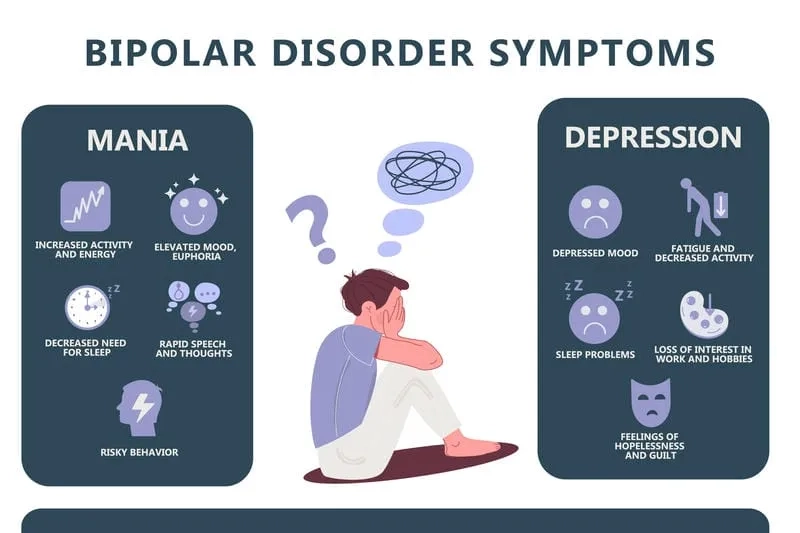
Key symptoms of Bipolar Disorder to watch for
- A key sign is the manic episode, characterized by elevated energy, euphoria, racing thoughts, and impulsive behavior that significantly impairs functioning.
- These highs are contrasted with major depressive episodes, involving intense sadness, loss of interest, fatigue, and feelings of worthlessness.
- In the bipolar 1 vs 2 comparison, Bipolar 1 has full manic episodes, while Bipolar 2 features less severe hypomania and major depression.
How can you manage Bipolar Disorder effectively?
- A professional bipolar disorder treatment plan starts with a thorough evaluation; there is no single bipolar test, but a psychiatrist can make a diagnosis.
- Long-term management typically involves medication, with mood stabilizers being the cornerstone of treatment to prevent extreme highs and lows.
- Therapy, stress management, and maintaining a regular sleep schedule are crucial supportive strategies to help prevent relapses and manage symptoms.
>>> Learn more: Chiari malformation - When brain tissue extends into the spinal canal
The top Bipolar Disorder images everyone is searching for






>>> Read to understand more: Syringomyelia - Understanding cysts within the spinal cord
Living a stable life with bipolar disorder is achievable. If you recognize these signs, seek a professional evaluation. A proper diagnosis is the first step toward an effective treatment plan.
>>> Understand more about: Major depressive disorder - More than just feeling sad